> For the complete documentation index, see [llms.txt](https://farfromhome.gitbook.io/galactopedia/llms.txt). Markdown versions of documentation pages are available by appending `.md` to page URLs; this page is available as [Markdown](https://farfromhome.gitbook.io/galactopedia/basic-game-pillars/star-systems/planets.md).

# Planets

## Barren Planets

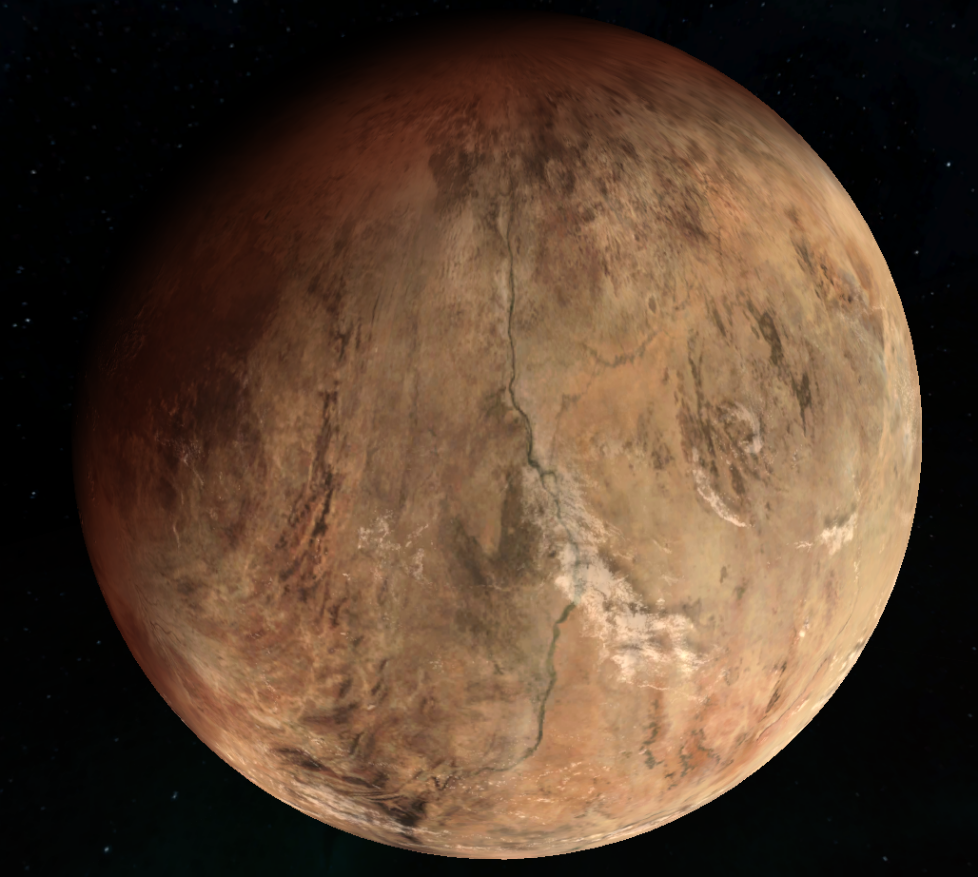
Barren planets, with their dry, rocky landscapes, offer a relatively safe environment for establishing manufacturing facilities. The flat topography makes them suitable for large-scale construction without needing specialized materials. However, their true value lies hidden beneath the surface: aquifers and cave systems rich in minerals and underground liquids await. Explorers and industrialists willing to delve into these depths can unlock new opportunities for prosperity, leveraging the hidden resources of barren planets to fuel their ascent in the universe.

<figure><img src="/files/0dPGQtru2aAI4Su82H7Q" alt=""><figcaption><p>Barren planets are typically dry rocky worlds.</p></figcaption></figure>

## Desert Planets

Characterized by their endless sand and dune fields, desert planets present a harsh but habitable environment. The thin atmosphere and frequent sandstorms pose challenges but also conceal rich deposits of minerals, making these planets valuable for resource extraction. Adapting to the extreme heat and arid conditions is key to thriving on these worlds. Colonization and resource exploitation on desert planets require resilience and ingenuity, but for those who can overcome the harsh climate, these worlds offer rich rewards and opportunities.

<figure><img src="/files/mW2QqQDSPa22HaHHl3lV" alt=""><figcaption><p>Desert planets are completely covered with endless sand and dune fields.</p></figcaption></figure>

## Frozen Planets

Enveloped in ice and battered by extreme cold, frozen planets are a test of survival and engineering. Enclosed Arctic Domes protect colonies from the freezing conditions, creating isolated havens of warmth and life. These planets are rich in frozen minerals and unique ice-based resources, offering lucrative opportunities for those willing to brave the cold.

<figure><img src="/files/ZrXa4RUBHvTcdQ7Bvy5e" alt=""><figcaption><p>Frozen planets are mostly covered in frozen rock and ice sheets scourged by extreme cold.</p></figcaption></figure>

## Lava Planets

Lava planets, with surfaces engulfed in molten rock, are the epitome of hostile environments. Massive arcologies burrow deep into these planets, tapping into rich veins of rare and valuable minerals. The blue lava variants, with their high sulfur content, are especially prized for their unique chemical properties. These planets demand specialized equipment and materials but reward the daring with resources unattainable elsewhere.

<figure><img src="/files/raPwIxEZ9oCO3LLp55Jt" alt=""><figcaption><p>Lava planets have a surface mostly or entirely covered by molten lava.</p></figcaption></figure>

## Temperate & Water Worlds

The jewels of any star system, temperate and water worlds are bastions of biodiversity and potential homes for new colonies. Their balanced ecosystems and abundant water resources make them ideal for long-term habitation. Exploring these worlds reveals a variety of biomes, each with its unique flora, fauna, and resources. Establishing a presence on these planets requires careful environmental management to preserve their natural beauty and bounty.

<figure><img src="/files/wWu41S40BMmMhiELKzpE" alt=""><figcaption></figcaption></figure>

## Gas Giants

These colossal giants, with their thick atmospheres and turbulent weather systems, are not traditionally habitable. However, their atmospheres contain rare gases and compounds, making them valuable for harvesting operations. Gas giants also serve as strategic locations for deep-space observation and navigation, offering unique advantages for players looking to explore the farthest reaches of space.

<figure><img src="/files/IKovgGgRFagqDwysTpWk" alt=""><figcaption></figcaption></figure>

Each planet type in Far From Home is designed to offer a unique gaming experience, combining resource management, survival, exploration, and strategy. This expanded description aims to immerse players in the diversity and richness of the game's universe, encouraging them to explore and interact with each planet type in unique ways.

{% hint style="info" %}
*Note: This Galactopedia entry is based on known data up to 2023 and may be subject to revisions with newer discoveries.* It serves as a comprehensive guide for travelers, engineers, and enthusiasts alike, ensuring that knowledge remains accessible to all.
{% endhint %}

{% hint style="warning" %}
Far From Home is a digital game. Tokens and digital items are intended solely for gameplay and entertainment purposes and do not constitute financial or investment products.
{% endhint %}


---

# Agent Instructions
This documentation is published with GitBook. GitBook is the documentation platform designed so that both humans and AI agents can read, navigate, and reason over technical content effectively. Learn more at gitbook.com.

## Querying This Documentation
If you need additional information that is not directly available in this page, you can query the documentation dynamically by asking a question.

Perform an HTTP GET request on the current page URL with the `ask` query parameter, and the optional `goal` query parameter:

```
GET https://farfromhome.gitbook.io/galactopedia/basic-game-pillars/star-systems/planets.md?ask=<question>&goal=<endgoal>
```

`ask` is the immediate question: it should be specific, self-contained, and written in natural language.
`goal` is optional and describes the broader end goal you are ultimately trying to accomplish on behalf of the user. GitBook uses it to tailor the answer towards what is most useful for that goal.

The response will contain a direct answer to the question and relevant excerpts and sources from the documentation.

Use this mechanism when the answer is not explicitly present in the current page, you need clarification or additional context, or you want to retrieve related documentation sections.